Some of you who have read my posts may have noticed the use of the word “sidereal” when I mention zodiac signs, and may perhaps be wondering what does “sidereal” mean, and why do I need to mention it. Why didn’t just say “Venus entering Virgo” but instead I wrote “Venus entering sidereal Virgo”?
Well, I added in the differentiation because there are two “types” of zodiac used in astrology – tropical zodiac and sidereal zodiac.

Most of the information we get online regarding zodiac signs are based on the tropical zodiac. For example, if you were to search “when does Sun enter the sign of Cancer”, the date you get will be based on the tropical zodiac. Or if you were to look up your fortune for today under the “horoscope” section in newspapers and magazines, that is also based on the tropical zodiac. This zodiac is used primarily in “western” astrology.
On the other hand, the sidereal zodiac is used primarily by Vedic astrologers since this form of astrology was developed a very long time ago, and is still being used today.
Tropical vs Sidereal Zodiac
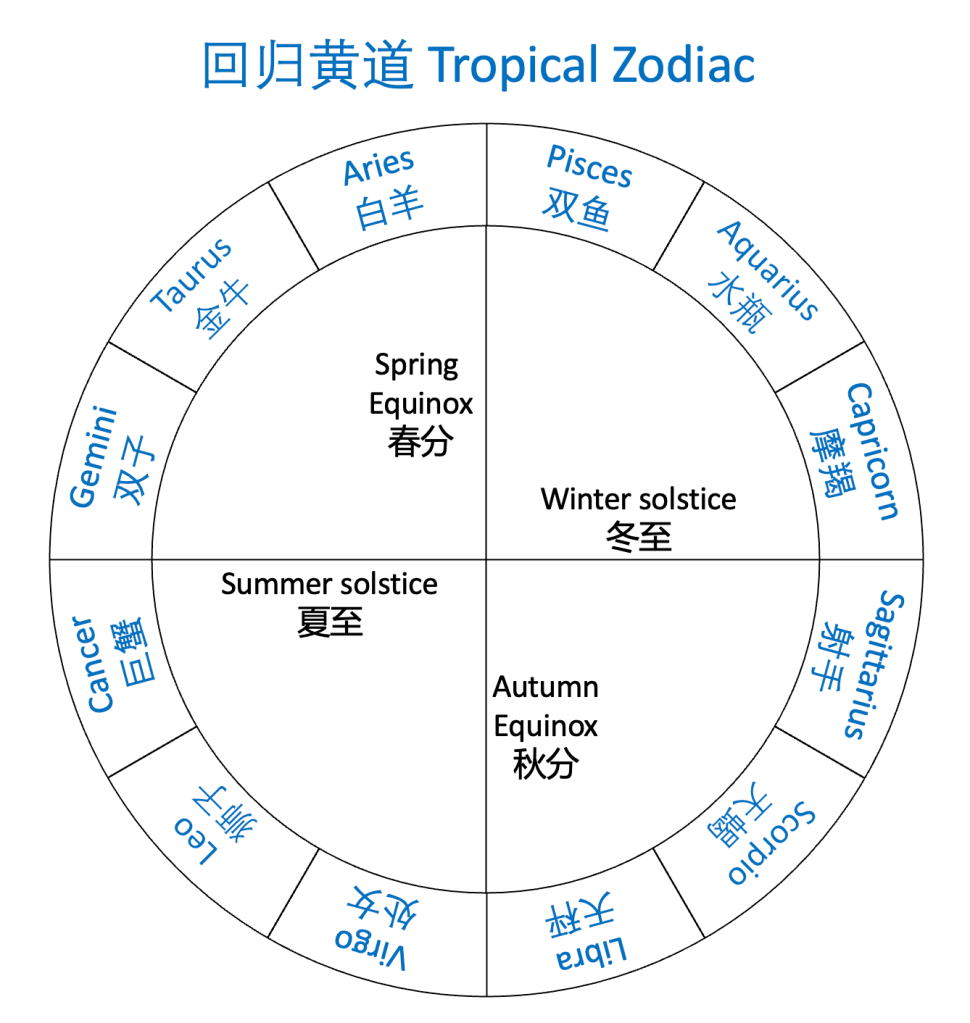
The tropical zodiac is aligned with the seasons, or more precisely, with the equinoxes and solstices. The Sun’s ingress into Aries is aligned with the spring equinox. The ingress into Cancer marks the summer solstice. Autumn equinox is aligned with the Sun entering Libra, and the winter solstice marks the Sun’s entry into Capricorn.
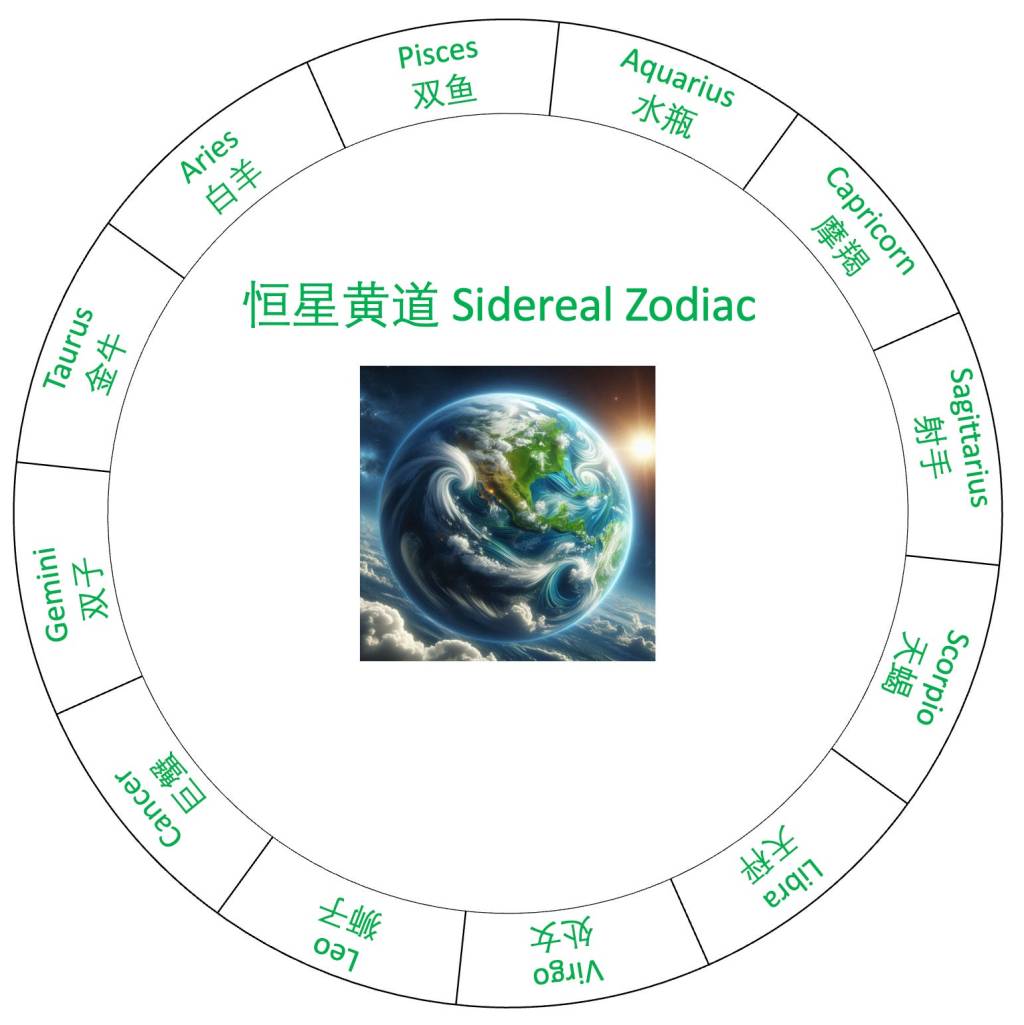
As the name “sidereal” suggests, the sidereal zodiac is aligned with the stars in the sky, and has nothing to do with the seasons on Earth. When we say that the Moon is in the sidereal sign of Aries, when we look up at the Moon at night, we will see the stars of the Aries constellation behind the Moon.
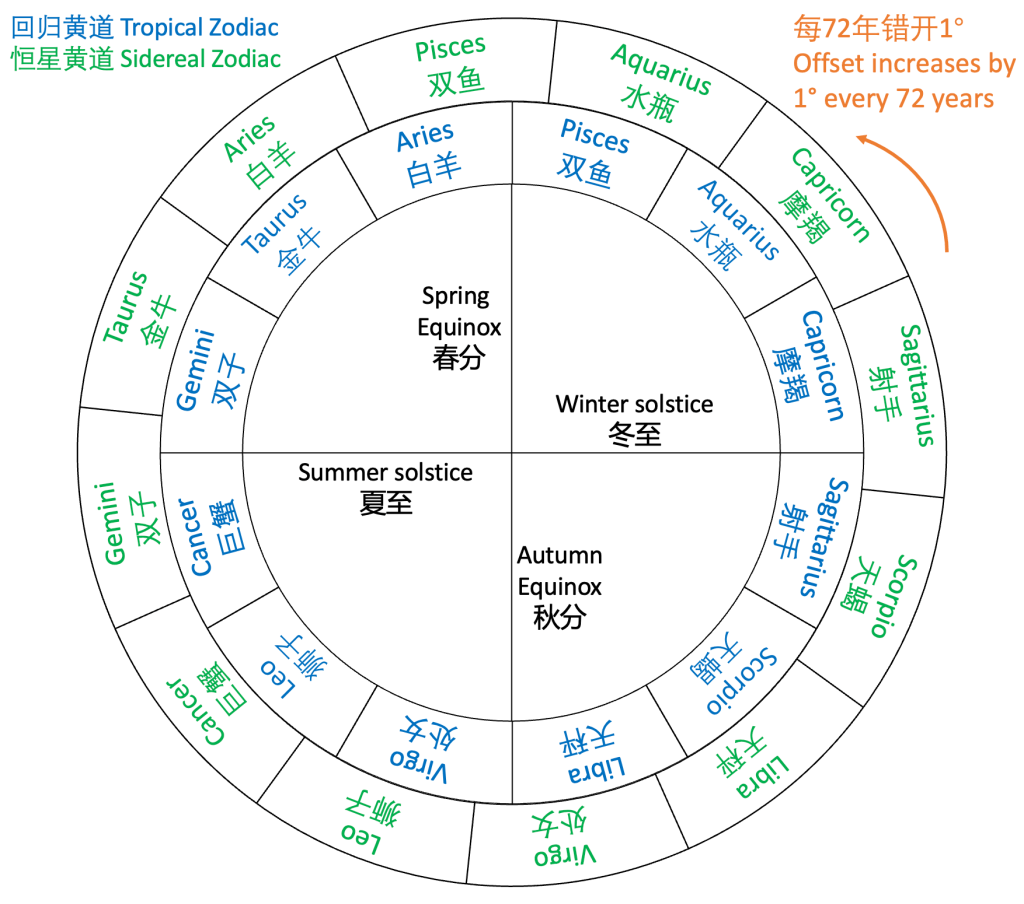
When we put the two zodiacs together, we can see that they are at an offset with each other. The start of Aries in the tropical zodiac is aligned, not with Aries in the sidereal zodiac, but with Pisces instead. This offset is due to the Earth’s precession, a very slow rotation of the Earth’s North-South axis that causes the Earth’s seasons (tropical zodiac) to shift with respect to the stars (sidereal zodiac).
This precession takes slightly over 25000 years to complete one orbit. In other words, it takes about 72 years for the offset to increase by 1°. Today, the offset is about 24°, meaning that the start of Aries in the tropical zodiac lines up with about 6° Pisces in the sidereal zodiac. Going by this calculation and assuming the rate of rotation is constant, the zodiacs were aligned about 1700 years ago.
Which to use?

At this point, some of you may have this question in your minds – “Which zodiac should I use?” Repeating the words of my guru, I would suggest drawing up your birth chart using both zodiacs, then decide for yourself which zodiac better describe your life experiences.
Some points to note. There will be differences in techniques used by western astrology versus vedic astrology. So when analysing the sidereal zodiac, one should stick with vedic astrology techniques to get the best interpretive results. Secondly, if you are using astrology to study weather patterns and seasonal changes, then no matter the branch of astrology, western or vedic, you are better off using the tropical zodiac.
As for myself, I have been learning astrology since 2019. I started with western astrology and have studied under several teachers, and they all use the tropical zodiac. In 2022, I met my current vedic astrology guru, and have since switched to sidereal zodiac. In my own experience, the sidereal zodiac better describes the life experiences of a person, and my clients that have been with me through this switch seem to resonate better when I use this zodiac.
And you might have a different experience, so I do encourage you to test it for yourself. I mean, isn’t it great to have another reason to look at birth charts? 😁
om gurave namah 🙏
If you want to know more about astrology or get an astrology reading, head on over to this page.

 Jerry Astrology
Leave a comment